От халепа... Ця сторінка ще не має українського перекладу, але ми вже над цим працюємо!

cookies

Hi! This website uses cookies. By continuing to browse or by clicking “I agree”, you accept this use. For more information, please see our Privacy Policy

Engagement & pricing

Software development engagement models

Fixed price, time and material, a dedicated team, or augmentation. Each one changes what you spend, when you know the total, and how much you manage day to day. Here’s how to choose.

Book a call
nerdzlab image Alt

Four ways to pay for software development

Fixed price

Most predictable

Time & material

Most flexible

Dedicated team

Best at scale

Team augmentation

Fills skill gaps

One price, agreed before work starts

Scope and price are settled before development begins. The number moves only if the scope does.

Best for Locked, documented scope
Billing One agreed price
Typical length 1–3 months
Scope risk Carried by us

Actual hours, invoiced monthly

Billed for the hours actually worked, invoiced monthly. Priorities can shift between sprints without reopening the contract.

Best for Evolving scope
Billing Hours × rate, monthly
Typical length 3+ months
Scope risk Carried by you

A flat monthly fee for your own team

A team working only on your product for a flat monthly fee. You set the roadmap; we handle hiring, retention and cover.

Best for Long-term roadmaps
Billing Fixed monthly fee
Typical length 6+ months
Scope risk Shared

Specialists who join your team

Individual specialists join your team at a monthly rate each. They report to you and work inside your process; we handle hiring, contracts and cover.

Best for Specific skill gaps
Billing Monthly rate per specialist
Typical length 3+ months
Scope risk Carried by you

How each model works

The same team and the same process — four different commercial shapes. For the background theory, read our guide to software development pricing models.

Model 01

Fixed price

Predictable by design — and only as good as the specification it rests on.

A fixed-price engagement starts before any code does. We work from a detailed specification, usually the output of a discovery phase. From it we agree the feature list, the team and the delivery date, then quote a single price for all of it.

That price has to hold for the life of the project, which cuts both ways. It carries a risk buffer, so it is rarely the cheapest number on paper. In exchange, if the build takes longer than we estimated, the overrun is ours to absorb: the figure you sign is the figure you pay.

Payment is tied to delivery milestones, and most contracts open with a prepayment. Anything outside the agreed scope goes through a written change request that states the new price and the new deadline before that work begins.

Pros
  • Budget known before you commit
  • A contractual delivery date, not an estimate
  • Minimal management overhead on your side
  • Easy to sign off with finance or a board
Cons
  • Needs complete documentation up front
  • Every change is renegotiated
  • Risk buffer priced into the total
  • Prepayment usually expected

Choose fixed price when the scope is genuinely settled — usually after a discovery phase has produced the specification, or for an MVP build with a deliberately frozen feature set.
Model 02

Time and material

Buy engineering time and point it wherever the product needs it.

Time and material bills for the hours actually worked, at an agreed rate per role, invoiced monthly with a report showing where the time went. A developer logs between 80 and 160 hours a month, depending on whether you book them part-time or full-time. The invoice follows the project’s real pace, not a forecast made months earlier.

The obvious worry is an open-ended bill. In place of a guaranteed total you get month-by-month control. The burn rate is visible as it happens, and you agree the scope of every sprint. You can slow the team down, scale it up, or stop at the end of any billing period.

It also means work can start before the specification is finished. That helps when the fastest way to learn what to build is to put something in front of real users.

Pros
  • Scope evolves without renegotiation
  • Work starts without a finished spec
  • Only pay for work actually done
  • Re-prioritise every sprint
Cons
  • Final cost isn’t fixed at the outset
  • Needs regular input from your side
  • Forecasting depends on reporting
  • Harder to sign off as one line item

Choose time and material when the product will change as it meets users — most web and mobile work, and anything where design and development run together.

Model 03

Dedicated development team

A standing team that knows your product, on a predictable monthly cost.

A dedicated team is a flat monthly payment for a group of specialists — engineering, QA, design, whatever the roadmap calls for — working only on your product. You direct their priorities as you would an in-house team; we carry recruitment, retention, replacement and the administration behind them.

Over a long engagement it is usually the most economical of the four, for a structural reason. The commitment is continuous, so we are not pricing in the risk of idle time between projects. That puts the effective monthly rate below the equivalent time-and-material arrangement. The team’s product knowledge compounds too, instead of resetting every time a contract ends.

The trade-off is the commitment itself. Below roughly six months the ramp-up rarely pays for itself, and the model assumes someone on your side can direct a team week to week.

Pros
  • Lower effective rate over a long engagement
  • Deep, retained product knowledge
  • Scale the team up or down as needed
  • You own the roadmap and the priorities
Cons
  • Only economical at sustained scale
  • Assumes a long-term commitment
  • Needs real management input from you
  • Not suited to short, one-off projects

Choose a dedicated team when you have a continuous roadmap and need engineering capacity to grow with it. See software development for growing businesses, or how CTO as a service fits alongside it.

Model 04

Team augmentation

Extra hands inside your own process, not a separate project team.

Team augmentation means hiring specialists with the exact skills a role needs and placing them inside the team you already have. You assign their tasks, run their stand-ups and review their work as you would for an in-house hire; we carry recruitment, contracts, payroll and cover if someone leaves.

The difference from a dedicated team is scope, not people. A dedicated team is a standing unit sized to a roadmap and shaped by us. Augmentation is one named skill filling one named seat, inside a process that already works: a mobile engineer for a platform you don’t cover, a QA lead ahead of a release.

That makes it the quickest of the four to arrange and the easiest to unwind. Budget for onboarding, though: however senior the specialist, nobody is productive in an unfamiliar codebase on day one.

Pros
  • Closes a specific skill gap fast
  • You keep control of tasks and priorities
  • Scale one person at a time
  • No recruitment or payroll overhead
Cons
  • Needs onboarding before output lands
  • You manage the specialist day to day
  • Assumes a working process already
  • Less cost-effective than a full team at scale

Choose team augmentation when your process works and you’re short one skill, not a whole team — see our team extension guide for how we onboard specialists.

The four models, compared

Fixed price vs time and material vs dedicated team vs augmentation — the same eight questions, answered for each.

The four models, compared
Criterion Fixed price Time & material Dedicated team Team augmentation
Budget predictability High Total fixed in the contract Low Known per month, not in total High Same fee every month High Fixed rate per specialist
Scope flexibility Low Changes need a change request High Re-prioritise each sprint High You own the backlog High You re-point them like your own staff
Time to start 2–3 weeks specification required first ~1 week start with a backlog 1–2 weeks team assembly 2–4 weeks finding the right specialist
Your involvement Low Heavy up front, light after Medium Sprint reviews and priorities High You direct the team High You manage them directly
Best project size Small to medium Any size Medium to large Any size
Typical duration 1–3 months 3+ months 6+ months 3+ months
Who carries scope risk We do You do Shared You do
How you are billed One agreed price, by milestone Hours × rate, monthly, with a time report Fixed monthly fee per team Monthly rate per specialist
Get a model recommendation

Not sure which column you’re in? Most projects start in one model and move to another.

How we price work

The model changes how you’re billed. It doesn’t change how we estimate.

01

We scope before we quote

An estimate always follows a conversation about the product — never a form submission alone.

Step 1
02

You get a written breakdown

Hours per role and per feature, so you can see what’s driving the number and cut what isn’t worth it.

Step 2
03

Changes are re-estimated in writing

When requirements move, the revised figure comes before the work starts — not after it lands on an invoice.

Step 3
04

Indicative prices are public

Discovery from ~$1,200, MVP from ~$18,000, design from ~$7,500. See full pricing and cost estimates.

Step 4

Get a free AI estimate of your project

Upload your project scope — our AI compares it against dozens of real estimates we've delivered and returns hours and a breakdown in minutes. Free, automated, and no contact details needed. Get your quote now.

  • 100% free
  • Automated — results in minutes
  • AI trained on dozens of our real estimates

Which model fits your situation

Four questions cover almost every project that reaches us.

1.

You’re validating a new idea

Start with a fixed-price discovery phase, then a fixed-price MVP built against it. Two known numbers, no open-ended spend.

2.

You have a live product that keeps changing

Buy capacity rather than a deliverable and re-point it each sprint as you learn from users. Monthly invoices track the real pace.

3.

You’re scaling and need engineering capacity

A team working only on your product, with hiring and retention on our side and a predictable monthly cost on yours.

4.

Your process works, you’re short one skill

Add named specialists to your existing team at a monthly rate each. You direct the work; we handle hiring, contracts and cover.

The three models, in real projects

Same team, three different commercial shapes.

See more of our cases
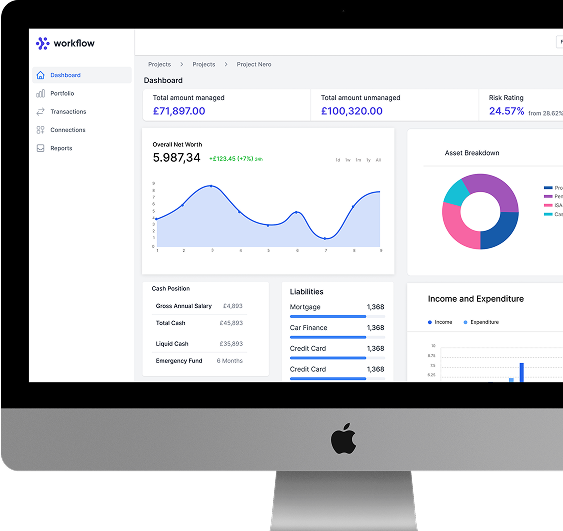
nerdzlab image Alt Fixed price FUZE

The ultimate financial planning tool

#Web #Consulting
Explore
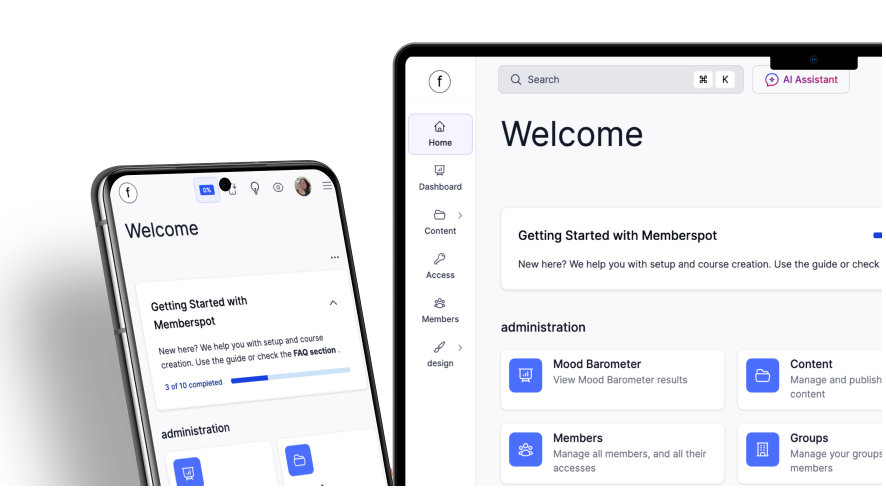
nerdzlab image Alt Time & material Memberspot

Real-time messaging for a live elearning product

#Product design #Web development
Explore
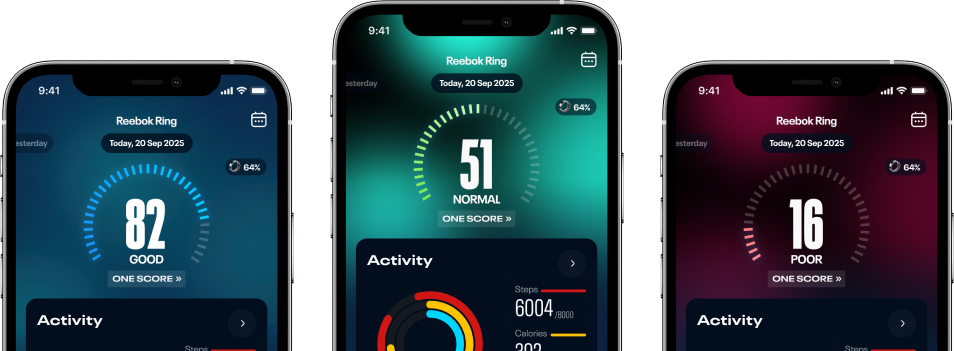
nerdzlab image Alt Dedicated team Reebok Fitness app

Top-tier fitness app development

#Web #Mobile development #Product design
Explore

Explore Our Portfolio

Browse our projects for a comprehensive look at our capabilities, helping you determine if we're the right fit.

Discover more feedbacks from Clutch

5.0

Every time NERDZ LAB’s releases a new feature, the client sees an increase in memberships, downloads, and overall usability of the app. The team provides an excellent service, and they stand out for their understanding approach. They manage the project seamlessly and are responsive partners.

Anonymous

COO, Wellness Company

5.0

NERDZ LAB’s resources have shown excellent dedication and understanding of the project, allowing them to deliver tasks successfully. The resources also have excellent communication and soft skills, as well as a good work culture. Moreover, NERDZ LAB excels at providing qualified candidates quickly.

Emil Petersen

CEO & CTO, Subit ApS

5.0

With NERDZ LAB support, the client successfully launched their app on the Google Play Store. Despite the complexity of the project, the service provider delivered the tasks on time and as per the SRS. Their responsiveness, constant communication, and collaborative approach were second to none.


Katherine Ikeda

Founder & CEO, FWD

5.0

NERDZ LAB has successfully delivered a market-ready platform, marking the project's success. The team is highly communicative and responsive via Slack and Zoom. Moreover, they're very professional and always bring to the table positive ideas and solutions, meeting the client's expectations.

Bryan Horner

Founder, evente.io

Discover more feedbacks from Clutch More feedbacks from Clutch

Our work in numbers

We design and build digital products that grow — MVPs for first-time founders, AI-powered features for scale-ups, and full product overhauls for businesses that are growing. 250+ products launched. $535M raised by our clients. 5.0 on Clutch.

250+

projects launched

150+

clients worldwide

80+

engineers, designers & AI specialists on our team

$535M

total funds raised by our clients

Not sure which model fits? That’s a 30-minute conversation.

Tell us what you’re building and where you are in it. We’ll say which model we’d use, and why.
Book a call
nerdzlab image Alt

FAQ